
Sometimes, we don’t need an entirely new life. We simply need to care differently for the life we already have.
For a long time, I thought my life was terrible—uneventful, unexciting, and far too ordinary.
I believed I would never do anything truly meaningful or accomplish something important, even though I had always been a big dreamer.
Perhaps part of that feeling came from constantly looking around and noticing what was missing from my life more easily than recognizing what was already there.
I have a neighbor whose yard always looks perfect. The grass is beautifully green, the bushes are neatly trimmed, and everything seems impeccably maintained.
Every time my husband and I left the house, it was impossible not to notice it. And we almost always ended up making the same comment:
“We really need to do something about our yard.”
After talking about it for long enough, we finally found the courage to begin. We went to a home improvement store to find out how much it would cost to renovate the space.
And, my goodness.
I couldn’t tell whether my budget was painfully small or everything had simply become outrageously expensive.
Probably both.
The materials, the plants, and nearly everything we thought we needed cost much more than we expected. Perhaps that is simply part of the price we pay when we decide to build something new—or rebuild something that no longer works as it once did.
Since we didn’t have all the resources we would have liked, we had to become creative.
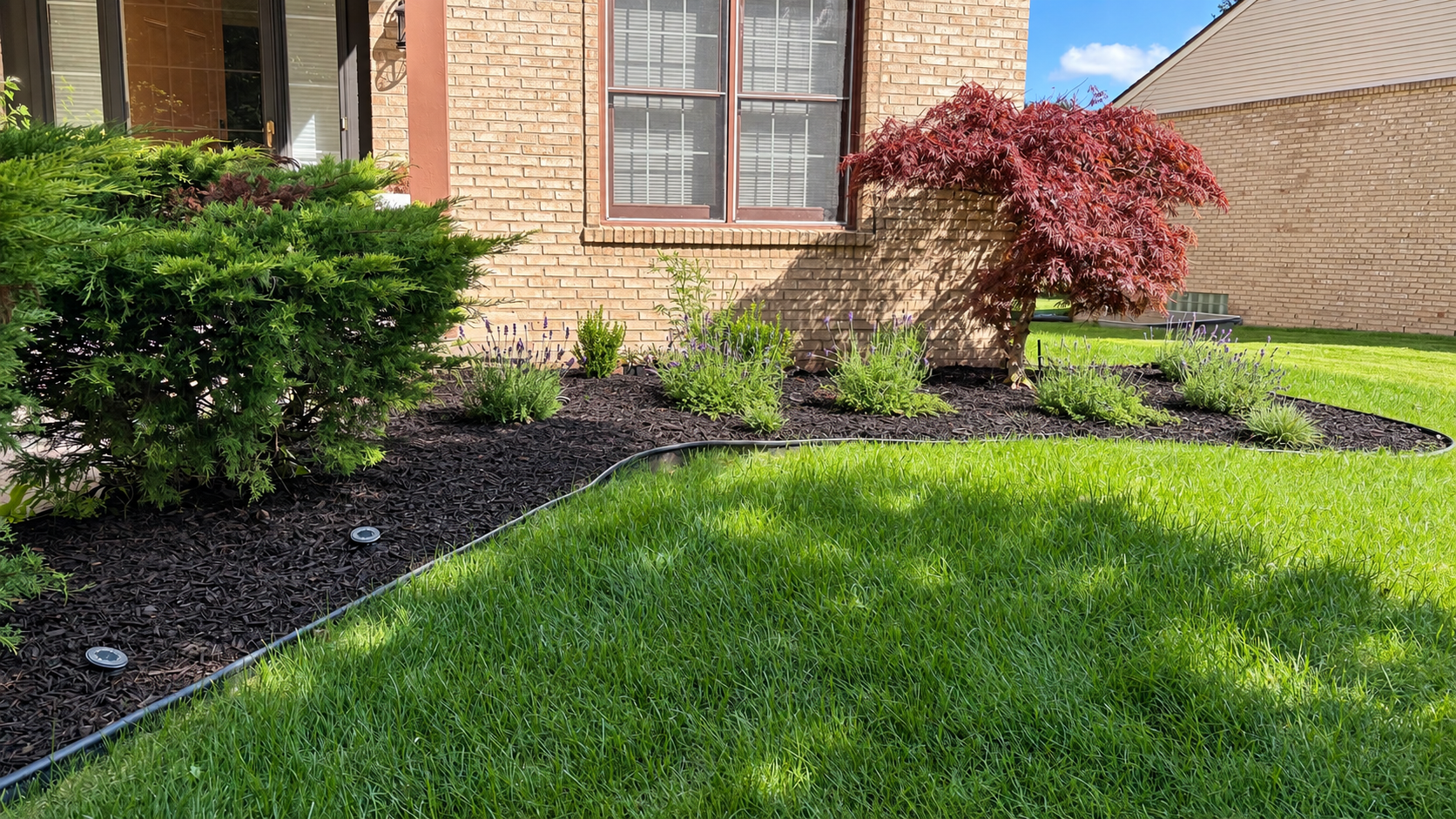
We reused things we already had at home, including pieces from the yard itself. We adjusted the height of the fence, bought a few new plants, and added outdoor lights. We even drove to a store much farther from home because the plants there were considerably more affordable than the ones sold near us.
Before we could begin, we researched, sketched, planned, compared prices, and tried to decide what we could realistically accomplish.
And, of course, there were a few disagreements along the way about what the yard should look like. My husband imagined one thing; I imagined another. Eventually, we found a direction that worked for both of us.
Then came the long-awaited moment to start building—to literally put our hands in the dirt.
There I was, digging holes, pulling out the roots of old plants, and saying good morning to approximately three hundred spiders.
It was quite an undertaking.
What I had imagined would be a simple weekend project became three full weeks of work.
Somewhere in that process, I learned a few lessons that I can now carry into other areas of my life—and perhaps there is something in them for you too.
Whenever you see someone with a more beautiful garden and greener grass, remember that it probably didn’t happen overnight.
And it certainly wasn’t created by luck alone.
Behind that garden, there was work. There was dedication, effort, investment, and perhaps many miles driven to places you will never know about—all for the pleasure of seeing a long-imagined garden finally come to life.
You see the finished garden, but you don’t see the entire story that came before it.
You don’t see the research, the plans that had to be changed, the purchases that didn’t fit the budget, the roots that were difficult to remove, the mistakes, or the disagreements that happened during the process.
You admire the result without knowing the price that was paid to create it.
I also discovered that taking care of your own garden is not nearly as pleasant as it looks when you are admiring someone else’s finished one.
It requires willingness, focus, investment, and quite a bit of courage to face the spiders of life.
You have to accept that some projects will take longer than expected. Some roots will run much deeper than they first appear. And sometimes, to build something new, you must remove, reuse, reposition, and begin again.
I also learned that there is nothing wrong with working as a team, asking for help, and involving the people who will eventually benefit from what you are building.
After school, my sons would come home and, almost magically, offer to help me instead of immediately going to play video games.
My husband did the same. After work, he would join us and continue helping with the yard.
In the end, we were rewarded with a space that felt beautiful, unique, and genuinely ours.
We didn’t have all the resources we wished we could invest in it. But after adjusting a few things, the result was somehow even better than what we had originally planned.
And perhaps the most important transformation didn’t happen in the garden at all.
Those became three of the best weeks I have ever spent with my boys.
We built a garden, but without realizing it, we were also building experiences and creating memories as a family.
Life often works the same way.
We spend so much time imagining the day when we will finally have the perfect garden—the one that looks just like our neighbor’s.
We dream about another life, another reality, another set of opportunities. Yet we are not always willing to pay the price required to cultivate what we say we want.
We don’t want the work of repairing, realigning, and rebuilding.
We don’t want to deal with the deep roots because that requires time, effort, focus, and dedication. Sometimes, it asks us to direct our attention toward the very things we would rather ignore.
We have to confront our fears. We have to tolerate the opinions and criticism of people passing by while our garden is still under construction.
There is something deeply uncomfortable about allowing other people to see the mess of the process.
But no garden remains beautiful without occasionally going through a season of overturned soil.
Today, I understand that perhaps my life was never as terrible or insignificant as I once believed.
Maybe I had simply spent too much time looking at other people’s gardens and too little time recognizing, cultivating, and transforming my own.
Adjusting your route doesn’t always mean throwing everything away and beginning an entirely new life.
Sometimes, it means looking honestly at what you already have. It means removing what has taken root in the wrong place, reusing what can still serve a purpose, and accepting help as you rebuild.
Your garden may not turn out exactly as you imagined. It may cost more, take longer, and demand much more from you than you expected.
But it may also give you something that was never included in the original plan: connection, stories, growth, and memories that money could never buy.
And when you finally look at the result, there is a kind of satisfaction that only those who participated in the process can truly understand.
To enjoy something that carries your effort, your work, and your story?
Oh, that is truly priceless.